

D109 Seberang Manong 4
Overview
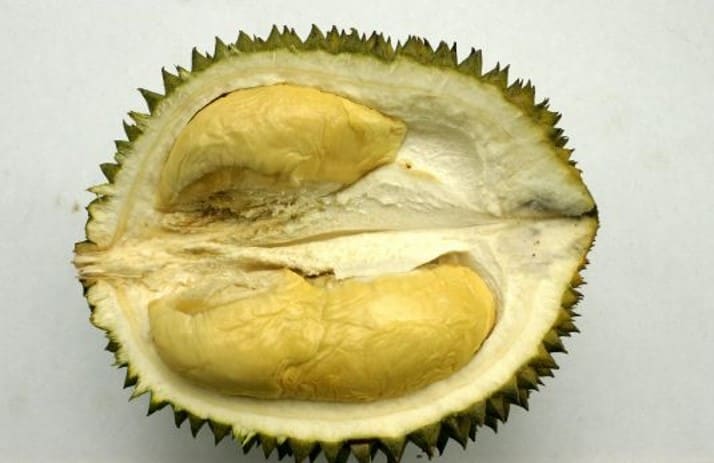
D109 Seberang Manong 4 is a durian variety registered in 1970 from Perak, distinguished by its unusual flesh color: the Department of Agriculture (DOA) describes the flesh as "kuning merah jambu" -- yellow pink. This places D109 in a very small group of registered Malaysian durian clones whose flesh falls outside the typical spectrum of white, cream, and yellow. Pink-tinged flesh in cultivated durian (Durio zibethinus) is uncommon, and genuinely pink-yellow flesh is rarer still.
Unlike its neighbor in the DOA registry, D110 Seberang Manong 5, which was registered in the same year by the same reporter and is described as having outright red flesh, D109 comes with a more complete profile. The DOA recorded its shape, size, flesh color, taste, texture, and consistency -- making it one of the more thoroughly documented early registrations and offering a meaningful picture of the fruit's eating quality.
The official description characterizes D109 as a medium-large fruit with a wide elliptic shape, creamy sweet flesh, coarse texture, and firm consistency. This combination -- pink-yellow color with a rich, dense, sweet profile -- makes D109 a genuinely distinctive entry in the national durian registry, noteworthy for both its visual and gustatory properties.
Origin & History
Seberang Manong is a locale in the Kuala Kangsar district of Perak, in northern Peninsular Malaysia. Kuala Kangsar is the royal town of Perak, situated along the Perak River in a region with deep agricultural roots. The surrounding landscape is hilly and forested, dotted with traditional kampung orchards where old durian trees -- many unnamed, unregistered, and predating any systematic documentation effort -- have grown for generations.
D109 was registered in 1970 during the period when the DOA was methodically documenting local durian varieties across the peninsula. Many registrations from this era represent trees that had already been producing fruit for decades. The name "Seberang Manong 4" indicates that at least three other durian varieties from the same locale had already been registered before D109, suggesting that the area was recognized as harboring meaningful durian diversity.
The reporter, Yeop Abd. Rahman Bin Anjang Osman, registered at least two varieties: D109 (Seberang Manong 4) and D110 (Seberang Manong 5). Together, these registrations point to something genuinely unusual about the durian gene pool in Seberang Manong. D109 has pink-yellow flesh; D110 has red flesh. Finding two trees with flesh colors this far outside the norm in the same small area, reported by the same individual, suggests a pocket of genetic variation that may have developed over a long period of isolation or through natural cross-pollination among local trees with atypical pigmentation traits.
The title "Yeop" in the reporter's name is a Malay honorific specific to Perak, traditionally associated with families of recognized standing in the state's feudal hierarchy. This detail places the reporter within a particular social context -- a Perak landholder with access to established orchards and the standing to engage with the DOA's documentation program.
No commercial cultivation records, flavor reviews, or photographic documentation of D109 have been found in publicly available sources. The variety's story, for now, is preserved almost entirely through its DOA registry entry.
Characteristics
The DOA description of D109 is notably more detailed than many early registrations, recording several physical and sensory traits:
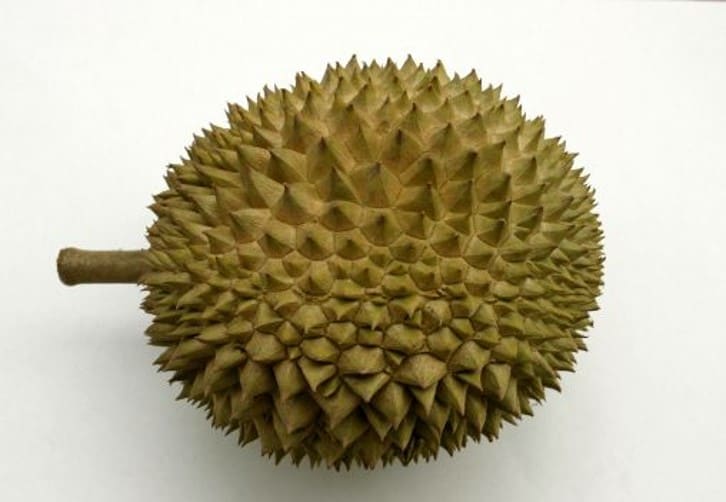
Wide elliptic shape (eliptik lebar). The fruit has a broad, oval profile -- wider than a standard ellipse. This shape is moderately common among durian varieties and typically indicates a fruit that is broader through the middle relative to its length.
Medium-large size (sederhana besar). D109 is described as being between medium and large, suggesting a fruit of respectable heft without reaching the dimensions of the largest commercial varieties.
Yellow-pink flesh (kuning merah jambu). This is D109's most visually distinctive trait. "Kuning merah jambu" in Malay describes a color that blends yellow and pink -- not a faint blush, but a recognized tonal category. The DOA's careful use of this compound color term (as opposed to simply "kuning" for yellow or "merah jambu" for pink) suggests the flesh genuinely exhibits both yellow and pink hues, likely appearing as a warm pinkish-yellow or a yellow with distinct pink undertones. In the broader world of durian flesh colors, this places D109 closer to the unusual end of the spectrum -- in the territory of varieties like D175 Red Prawn (Udang Merah), which is known for salmon to pale-orange tones, though D109's pink-yellow is a distinct description.
Creamy and sweet (lemak; manis). The flesh is described as "lemak," a Malay term that translates most closely as creamy, rich, or fatty -- implying a buttery mouthfeel rather than a watery or thin one. Combined with "manis" (sweet), this suggests a flavor profile centered on richness and sweetness, without the prominent bitterness found in some durian varieties.
Coarse texture (bertekstur kasar). The flesh has a coarse or rough texture, meaning it is not the silky, smooth, fiberless consistency prized in varieties like Musang King. Coarse-textured durians often have a more fibrous or granular mouthfeel. This is neither a flaw nor a virtue in itself -- some durian enthusiasts appreciate the more rustic, textured quality of older kampung varieties.
Firm consistency (pejal). The flesh is described as firm or solid, not soft or custardy. Firm flesh holds its shape when handled and tends to separate cleanly from the seed. Combined with the coarse texture, this suggests a dense, substantial flesh that would feel weighty on the tongue.
Taken together, these traits paint a picture of a durian with an unusual visual appearance and a rich, sweet, dense eating quality -- a fruit that may lack the refinement of modern commercial favorites but offers character and distinction.
Availability
D109 Seberang Manong 4 is not available in the contemporary commercial durian market. It does not appear in nursery catalogs, online durian stall listings, or enthusiast discussion forums. No commercial orchards are known to cultivate it.
Whether the original tree or its descendants still exist in the Seberang Manong area is unknown. The Kuala Kangsar district retains some traditional orchards, and it is possible that trees of this variety survive unmarked and unharvested in aging kampung dusun. However, many early-registered clones from the 1960s and 1970s have been lost as old orchards were cleared for development or replanted with commercially dominant varieties like D197 Musang King and D24.
D109 deserves attention as part of a broader story about color diversity in Malaysian durian. Together with D110, it suggests that the Seberang Manong area once harbored -- and may still harbor -- durian trees producing flesh in colors rarely seen elsewhere in the species. For researchers studying the genetics of carotenoid and anthocyanin expression in Durio zibethinus, the Seberang Manong cluster represents a potentially valuable site for field investigation. For durian enthusiasts, D109 is a reminder that the national registry contains varieties whose unusual qualities have never reached the market and remain waiting to be rediscovered.