

D140 DX / Rouge D24
Overview
D140, officially named DX and commonly known as Rouge D24, is a durian variety from Selangor registered with Malaysia's Department of Agriculture (DOA) in 1981. Unlike most entries in the national durian registry, D140 was registered by Jabatan Pertanian (the Department of Agriculture) itself rather than by an individual farmer -- indicating that the variety was identified and documented through the department's own evaluation and selection work.
The name "Rouge D24" is the most striking thing about this variety before one even opens the fruit. "Rouge" is the French word for red, and its pairing with "D24" -- one of Malaysia's most iconic and widely consumed durian varieties -- immediately invites comparison. The DOA record describes D140's flesh as orange-yellow ("kuning jingga"), a warmer and more intensely colored tone than the golden yellow typically associated with standard D24. Whether D140 is a direct genetic variant of D24, a seedling offspring that inherited and intensified certain traits, or simply an unrelated variety that reminded evaluators of D24, the official record does not specify. The "DX" designation adds another layer of ambiguity; in Malaysian durian nomenclature, "DX" does not correspond to any standardized classification, though the prefix has occasionally appeared in connection with D24 subtypes such as DXO (a variant of D24 XO known for its fermented, alcoholic notes).
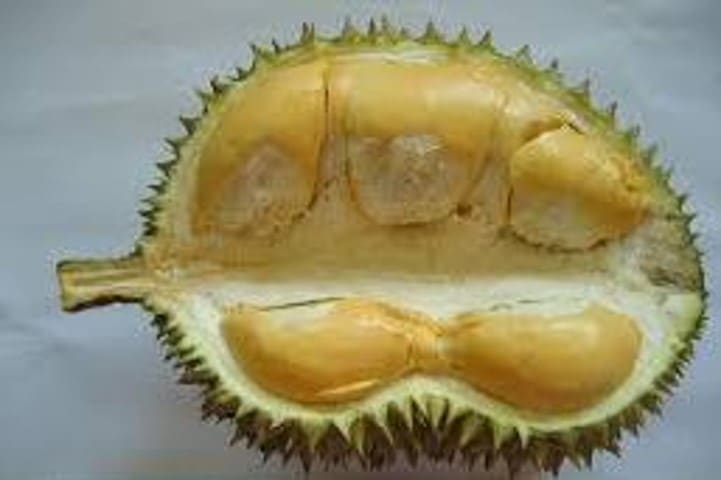
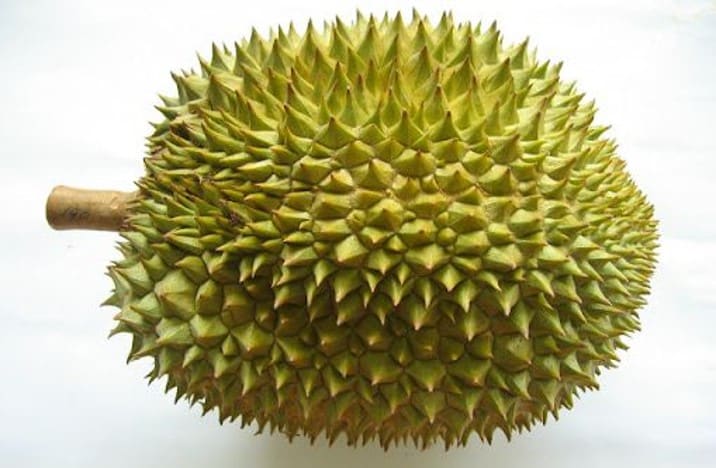
The DOA description paints a picture of a physically distinctive fruit: medium-large in size, elliptic in shape, with long and very sharp thorns, brown skin that cracks open easily, and medium-thick flesh in that characteristic orange-yellow hue.
Origin & History
D140 was registered in 1981 from Selangor, the state that surrounds Kuala Lumpur and has long been home to both agricultural research institutions and productive durian orchards. Selangor's significance in durian history is substantial: the DOA's headquarters in Serdang, Selangor, has served as a central hub for durian evaluation, germplasm collection, and varietal registration since the early decades of the program.
The fact that D140 was registered by Jabatan Pertanian rather than a private individual is noteworthy. This pattern is associated with varieties that were identified during systematic evaluation -- either from government research stations, trial plots, or field surveys conducted by DOA officers. The 1981 registration date places D140 in a productive period for durian documentation in Malaysia, when the department was actively expanding the registry with new clones from across the peninsula.
The relationship to D24 implied by the name "Rouge D24" is tantalizing but undocumented in publicly available sources. D24 itself was registered far earlier, in 1934, from Bukit Merah in Perak, and has since become one of the most widely planted and commercially successful durian varieties in Malaysia and across Southeast Asia. D24 is known for its creamy golden-yellow flesh with a balanced sweet-bitter profile. Over time, various subtypes and marketing names have emerged around D24 -- Sultan, XO, Super D24, Highland D24 -- reflecting differences in growing conditions, ripening stages, and tree age rather than distinct genetic lines. D140's "Rouge D24" moniker may place it in this orbit of D24-adjacent varieties, or it may simply be a descriptive name noting a visual similarity. Without published genetic studies or breeding records linking D140 to D24, the connection remains suggestive rather than confirmed.
Characteristics
The DOA's registered description provides the following physical profile:
Fruit size: Medium-large ("sederhana besar"), placing it in a comfortable range for commercial appeal -- substantial enough to provide a generous yield of flesh without being unwieldy.
Shape: Elliptic, meaning an elongated oval form. This is a common durian shape, though the specific proportions can vary considerably between varieties.
Thorns: Long and very sharp ("berduri panjang; sangat tajam"). This is a notable descriptor. Many popular commercial varieties have been selected partly for shorter or blunter thorns that make handling easier. D140's long, very sharp thorns would make it more challenging to handle and could be one reason it has not gained commercial traction, despite otherwise favorable traits.
Skin: Brown in color ("kulit berwarna perang") and prone to cracking open easily ("mudah merekah"). The tendency to split is a double-edged characteristic. For consumers, a fruit that opens readily signals ripeness and makes the durian easier to access. For commercial logistics, however, premature splitting shortens shelf life and exposes the flesh to air, accelerating spoilage. This trait is common among kampung durians and older varieties that were selected for eating quality rather than transportability.
Flesh: Medium-thick ("isi sederhana tebal") and orange-yellow in color ("kuning jingga"). The orange-yellow coloring distinguishes D140 from the standard golden-yellow of typical D24 and aligns with the "rouge" in its name -- a warmer, deeper hue that suggests higher carotenoid content. Medium-thick flesh is a modest descriptor; it implies reasonable coverage but not the generous, pillowy thickness associated with premium commercial varieties.
The DOA record does not include information about flavor, aroma, texture, or seed size. The absence of taste descriptors is common for older registry entries, particularly those documented in the 1970s and 1980s when physical traits were prioritized.
Availability
D140 DX / Rouge D24 is a rare variety with no identified commercial presence. It does not appear in the standard offerings of durian sellers in Selangor or elsewhere, and it is absent from online durian retailers, enthusiast reviews, and market reports. The variety has not received a commercial planting recommendation from the DOA.
Despite its evocative name and the inherent market appeal of any variety connected to the D24 family, D140 appears to have remained within the confines of the DOA registry. The combination of easily splitting skin and formidably sharp thorns may have worked against its commercial prospects -- the former limiting shelf life and the latter making harvesting and handling more difficult.
D140 most likely survives in government germplasm collections, possibly at the DOA facility in Serdang or at MARDI research stations where a wide range of registered clones are maintained for conservation. Selangor's proximity to Kuala Lumpur means that kampung orchards in the state have faced significant pressure from urban development over the decades, reducing the likelihood that original mother trees have been preserved in situ.
For durian enthusiasts, D140 is a curiosity -- a variety whose name alone generates interest. The "Rouge D24" label hints at a story of color and lineage that the official record leaves untold. Whether it represents a genuine D24 offshoot with enhanced orange pigmentation, or simply an independent variety that earned a compelling nickname, D140 remains one of the many documented but commercially unexplored entries in Malaysia's durian heritage.