

D196 Simpang Permata
概述
D196 Simpang Permata 在马来西亚榴莲品种登记体系中处境相当特殊。它是全国被搜索次数最多的 D 编号之一,同时也是最难买到的榴莲之一。该品种1993年在马六甲注册,此后从未商业化、从未大规模推广,也从未出现在主导榴莲贸易的常规货单上。它的名声,几乎完全由那些亲自找上门、再告诉别人的人建立起来。
他们找到的,是一款偏苦的榴莲:果肉呈淡奶白色,口感厚实黏喉,尾韵在最后一口之后仍久久不散。在偏好苦味那一端的果农与老饕之间,D196 的追随者远远超出它的商业规模。
这个品种还有一项容易被忽略的特别之处。它注册于1993年,与 D197 猫山王同年。两款榴莲前后脚进入登记册,编号只差一位。一个成为国家出口产业的基石,另一个留在了亚罗牙也(Alor Gajah)的果园里,只有特意去寻的人才知道。
起源与历史
D196 来自马六甲北部的亚罗牙也,属于西马较早发展榴莲种植的州属之一。1993年由 Md. Nor Ibrahim 注册,身份是个人果农,而非政府机构或研究站。
它的名字是地名。马来文中「Simpang」意为路口、交叉路,「Permata」意为宝石,合起来大致是「宝石路口」。这类名称在西马各地十分常见,这个品种几乎可以肯定是以母树最近的村落或路口命名,而非因为果实本身的特质。
1993年的注册,正处于马来西亚农业部积极扩充命名品种登记的时期,即1980年代末至1990年代初。那一批条目中,许多只被记录过一次,此后再无复查。D196 就是其中之一。
与 D197 的对照值得细想,因为它揭示了榴莲品种究竟如何走向成功。注册赋予的是一个编号和一份记录,却不会带来分销、接穗、行销,或是那些决定种什么的人的关注。D197 全部拿到了,D196 一样也没有,尽管两者在同一时期进入登记册,而马六甲的榴莲历史还比吉兰丹更长。
近年来,这个品种开始出现在马六甲以外。柔佛昔加末(Segamat)的树已经结果,当地卖家也带了少量进入市场。这些树究竟是从亚罗牙也的原始母本嫁接而来,还是同名的另一支地方选拔,并无记录可查。
外观
D196 果形宽椭圆,果皮呈绿色至绿褐色,尖刺向顶端逐渐转深。它的注册记录很简短,这是1990年代初条目的常态,当时更细致的性状描述规程尚未实施,因此没有果重、皮厚、果柄长度或种子性状的数据。
果肉才是真正需要了解的部分,而这里正是书面记录与实际果实产生分歧之处。
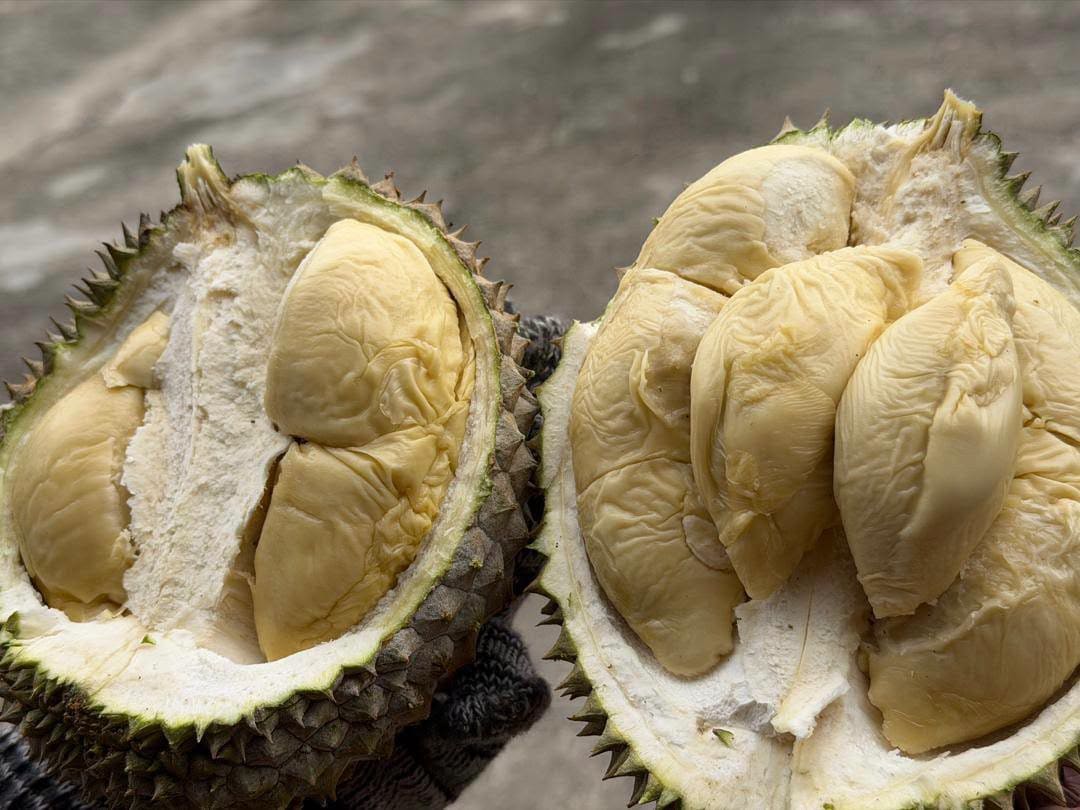
注册记录将果肉描述为黄色。但真正到手的果实,颜色一直比这更淡:柔和的奶白,有时几乎看不出黄。果农提到颜色会随树龄变化,幼树果肉偏奶黄,老树则接近奶白。不要期待猫山王那种饱和金黄,或红虾那种浓郁橙色。淡而近乎乳脂质感的果瓣,对这个品种而言是正常的,并不代表果实未熟或品质欠佳。
D196 还有一项被爱好者称为「黑脸」的特征。果肉表层之下带有深色调,透过半透明的薄膜可见,在光线下更明显,果瓣上常出现类似瘀伤的痕迹。老树果实上,这种色调可能加深至灰色。这是公认的品种特征,而非运输途中的损伤。
若有机会买到,还有一项物理特征需要留意:出肉率偏低。内壁厚实,果实所给予的比它的体积看起来要少,一公斤的果实有时只有两房果肉,偶尔仅一房。这是实实在在的缺点,也是这个品种始终未能吸引商业种植的原因之一。
风味与口感
D196 位于马来西亚榴莲风味谱的苦味一端。它的苦不是猫山王那种藏在甜味之后的背景音,而是走在最前面。爱好者把它与 D162 Tawa 归为同一档,这对想衡量自己能接受到什么程度的人来说是个有用的参照。
甜味存在,但居于次位,而且与苦味同时抵达,并非先后出现。人们最常提到的是它的尾韵:味道在吞咽之后才层层浮现并久久停留,这种回甘正是华语榴莲圈子里所说的「回甘」。也正是这一点,把偶然尝到的人变成隔年还会特地去找的人。
口感厚实而黏,并不顺滑。果肉柔软却不会干净化开,而是附着在上颚与喉间,这与它的风味相衬,但不会人人都喜欢。香气浓烈。
这里还有一处值得一提的反常:尽管果肉柔软,D196 的状态保持得异常好,不开壳可维持一两天。软肉榴莲通常败坏得很快,它却不然。
辨识方法
淡奶白色果肉: 最实用的线索。D196 的果肉呈淡奶白,而非金黄或橙色。若果瓣颜色鲜黄,就该怀疑手上的是不是这个品种。
果肉的深色调: 找「黑脸」。薄膜下的深色阴影,有时看似瘀伤,在老树果实上有时转为灰色。对这个品种而言,有比没有更正常。
内壁厚、房数少: 预期果实拿起来比吃起来更沉。一公斤的果实可能只有两房果肉。
宽椭圆果形: 中段偏宽,而非细长或明显的倒卵形。
先苦: 如果第一口的印象是甜,那多半不是 D196。
按编号出售: 没有人用品牌名行销这个品种。它要么以 D196 或 Simpang Permata 出售,要么根本买不到。若有卖家用自创的高档名称兜售,值得多看一眼。
市场供应与价格
D196 确实难买,而这并非饥饿营销。它不会出现在承载猫山王、黑刺、D24 与红虾的商业货单上,多数摊位从未经手过。现有的供应通常在产季开始前就已被预订,买家多是认识果农的人。
最可靠的方式是直接到产地。产季期间的马六甲亚罗牙也是原始母本树所在地,柔佛昔加末的新种植园则是它另一处露面的地方。
目前没有可靠的 D196 每公斤报价公开发布,本文也不会凭空编造一个。它的交易量不足以形成市场价,价格是果农与买家一果一议。相较之下,树苗容易取得且价格低廉,一株约从 RM 40 起,这也透露了这个品种真实的经济处境:种起来便宜,卖起来困难。
若真的买到了,果实不开壳可放一两天,比多数软肉品种更宽容。
种植区域
马六甲亚罗牙也是注册产地,也仍是那少量产量的核心。原始母本树在此,周边果园是产季期间最值得一试的地方。
柔佛昔加末是 D196 目前露面的第二个地点。当地的树已达结果树龄,少量果实已进入市场,让这个品种首次在原产州以外站稳脚跟。
除这两处之外,再无任何有组织的种植。农业部未针对 D196 在任何县区发出种植建议,全国也没有商业规模栽培的证据。出肉率偏低很可能就是原因。一个好吃但产出有限的品种,对于要在有限土地上决定种什么的果农而言,无论果实多好,都是难以说服的选择。
趣味知识
- 与名声只差一个编号。 D196 与 D197 猫山王同在1993年注册,编号仅差一位。猫山王后来重塑了马来西亚的榴莲产业与出口经济,D196 则留在亚罗牙也。除了连号之外,两者之间并无已知关联。
- 黑脸。 爱好者用这个词形容果肉表层下的深色阴影。在别的品种上会被当成瘀伤或变质的现象,在 D196 身上不过是它本来的模样。
- 比吃起来更沉。 一公斤的 D196 可能只产出两房果肉。厚实的内壁是它始终未能成为商业作物的原因,也是喜欢它的人把找到一颗当成一件事的原因。
- 名字与果实无关。 Simpang Permata 意为「宝石路口」,那是一条路,不是形容词。这个品种以母树所在的地点命名。
- 借来的绰号。 榴莲专业人士提到 D196 会被标为「忘不了」,偶尔也称 Empurau,取自砂拉越那种同样叫「忘不了」的高价河鱼。这类用法属于转述而非定论,在多数摊位上也听不到。
- 被搜索的次数远多于被卖出的次数。 D196 是马来西亚登记册中被查询最多的编号之一,这对一个几乎没人买得到的品种而言相当反常。与全世界最有名的榴莲只差一位数字,或许多少有点关系。