

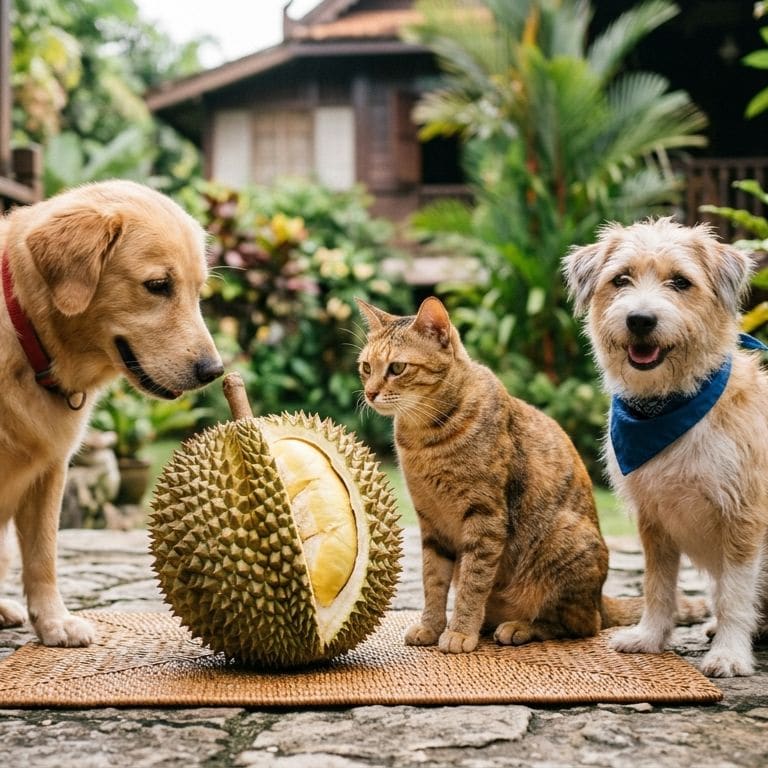
If you've ever eaten durian at home in Southeast Asia, you've probably had a furry audience. Cats will meow and chase you around. Dogs will park themselves at your feet and stare with maximum intensity. Some pets genuinely seem to love the smell that most humans find, well, divisive.
So can you share? Is durian actually safe for cats and dogs, or is this one of those situations where what's fine for humans is dangerous for pets?
The short answer: durian flesh is not toxic to cats or dogs. But "not toxic" and "good for them" are very different things. Here's what veterinary sources actually say.
Can Cats Eat Durian?
Durian flesh is not toxic to cats. If your cat sneaks a small piece off the table, there's no need to panic or rush to the emergency vet.
However, durian is not a good food for cats, and vets recommend against making it a regular thing. Catster, in a vet-reviewed article by Dr. Tabitha Henson (DVM), explains why: cats are obligate carnivores, meaning their digestive systems are designed to process meat, not plant matter. They aren't able to process sugar or plant products very well, and eating fruit, including durian, could cause stomach trouble, especially in larger quantities. (Catster)
The specific concerns for cats:
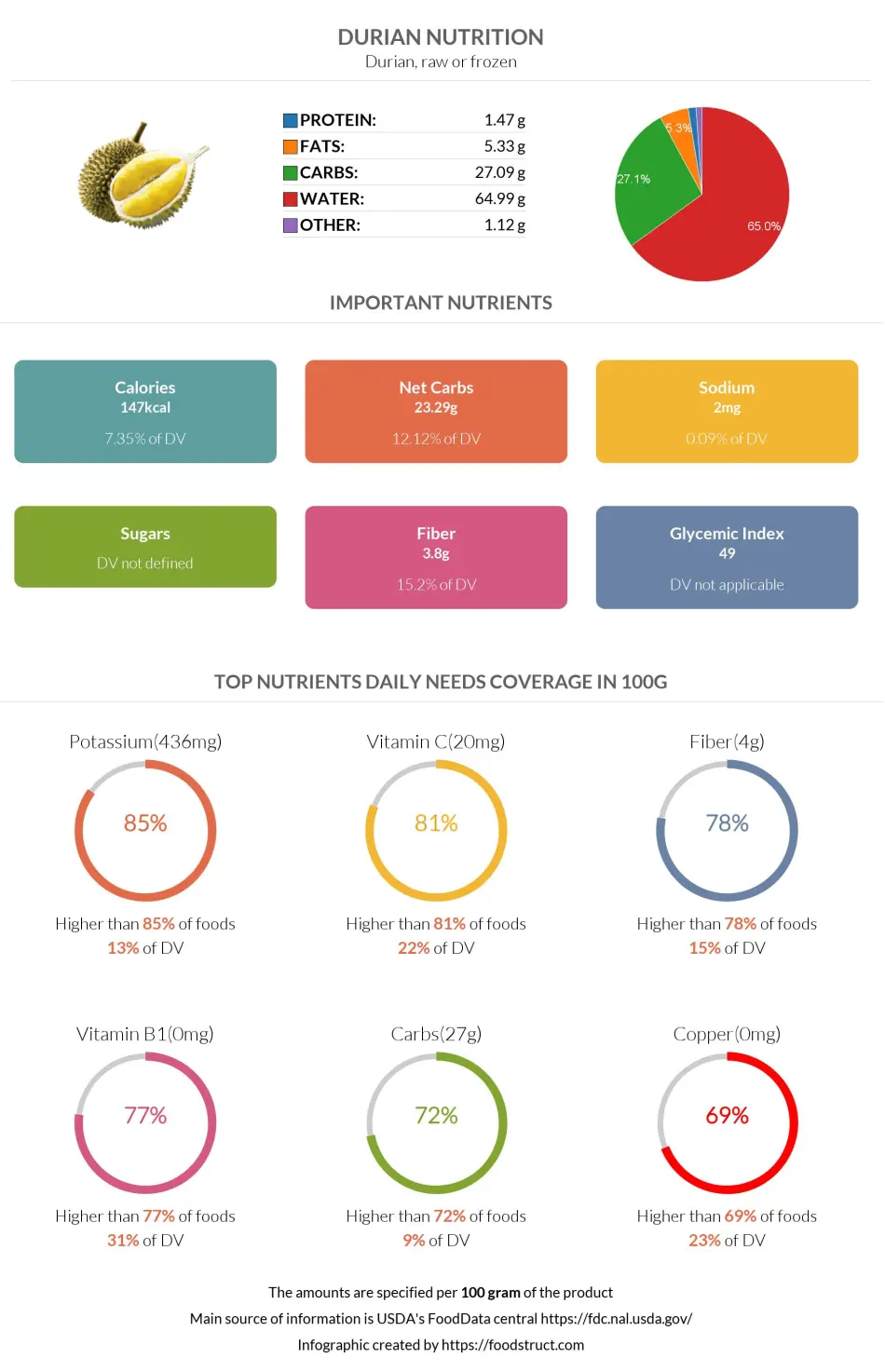
Sugar content. Durian contains 12.9g of sugar per 100g. Cats have no biological need for sugar and lack the taste receptors to even perceive sweetness. Feeding them sugary foods can contribute to obesity and dental problems over time.
Digestive upset. Even a few pieces can cause nausea, vomiting, or diarrhea in some cats. Their stomachs simply aren't built for processing fruit pulp.
Seeds are dangerous. Raw durian seeds contain compounds that can be toxic and pose a choking hazard. Never let a cat chew on or play with durian seeds.
The bottom line for cats: A tiny piece of flesh as a rare occurrence won't harm your cat, but there's no nutritional benefit for them. If your cat seems obsessed with the smell (some are), you can let them have a lick, but don't make it a habit.
Can Dogs Eat Durian?
Similar story, with one additional concern. Durian flesh is not toxic to dogs, and a small amount of the soft flesh is unlikely to cause serious harm. But vets advise caution.
Dogster, in a vet-verified article, notes that while durian isn't toxic to dogs, it is best to avoid giving it to them due to the high fat and sugar content. (Dogster)
The specific concerns for dogs:
Pancreatitis risk. This is the big one. Durian has 5.3g of fat per 100g, which is high for a fruit. Dogs are more susceptible to pancreatitis (painful inflammation of the pancreas) from high-fat foods than humans are. A dog that eats a large amount of durian in one sitting could develop pancreatitis, which requires veterinary treatment and can be life-threatening in severe cases. (Dial A Vet)
Sugar and weight gain. Regular consumption of high-sugar treats like durian can contribute to obesity in dogs, which brings its own cascade of health problems.
Seeds are a serious danger. Durian seeds are large, hard, and can cause choking or intestinal blockage if swallowed. A swallowed seed may require emergency surgery to remove. Seeds also contain compounds that may be toxic to dogs.
The bottom line for dogs: If your dog grabs a small piece of durian flesh, they'll almost certainly be fine. But don't actively feed them durian, and absolutely keep seeds out of reach.
The Seeds: The One Thing That's Actually Dangerous
For both cats and dogs, durian seeds are the real hazard. The flesh is a "not ideal but not dangerous" situation. The seeds are genuinely risky.
Durian seeds are large (roughly thumb-sized), hard, and slippery. For dogs especially, they're an obvious choking hazard. If swallowed whole, they can cause intestinal obstruction, which is a veterinary emergency that may require surgery.
Raw durian seeds also contain compounds that can be harmful when consumed uncooked. Humans traditionally boil or roast durian seeds before eating them, which neutralizes these compounds. Pets obviously aren't going to cook their food first.
Rule of thumb: When eating durian around pets, dispose of the seeds immediately and securely. Don't leave them on the table, on a plate, or in an open bin where a curious pet could get to them.
What To Do If Your Pet Eats Durian
If they ate a small amount of flesh: Monitor them for a few hours. Watch for vomiting, diarrhea, lethargy, or loss of appetite. Most pets will be perfectly fine. If symptoms appear and persist beyond a few hours, contact your vet.
If they ate a large amount of flesh: Call your vet for advice, especially for dogs (pancreatitis concern). Watch for signs of digestive distress: vomiting, diarrhea, abdominal pain, or unusual lethargy.
If they swallowed a seed: Contact your vet immediately. This is potentially a choking hazard or intestinal blockage. Don't wait for symptoms. Let your vet know the size of the seed and the size of your pet, and follow their guidance. Emergency surgery may be needed if a blockage develops.
Quick Reference
| Cats | Dogs | |
|---|---|---|
| Durian flesh toxic? | No | No |
| Safe to eat? | In tiny amounts, rarely | In small amounts, rarely |
| Main risks | Digestive upset, sugar | Pancreatitis, sugar, weight gain |
| Seeds safe? | No, choking/toxicity risk | No, choking/blockage/toxicity risk |
| What if they eat some? | Monitor, likely fine | Monitor, likely fine |
| What if they eat a seed? | Contact vet immediately | Contact vet immediately |
Frequently Asked Questions
Can cats eat durian? Durian flesh is not toxic to cats, but it's not recommended as food for them. Cats are obligate carnivores and don't process sugar or plant matter well. A tiny taste won't harm them, but regular feeding can cause digestive issues and isn't nutritionally beneficial. (Catster)
Can dogs eat durian? Durian flesh is not toxic to dogs in small amounts, but vets advise against it. The high fat content (5.3g per 100g) can trigger pancreatitis, and the sugar content contributes to weight gain. If you do offer some, remove all seeds and give only a small piece of flesh. (Dogster)
Are durian seeds poisonous to pets? Durian seeds contain compounds that may be toxic when consumed raw, and they pose a serious choking and intestinal blockage risk for both cats and dogs. Never let pets access durian seeds.
My dog ate durian, should I be worried? If your dog ate a small amount of flesh, monitor them but don't panic. Watch for vomiting, diarrhea, or lethargy. If they ate a large amount, call your vet due to pancreatitis risk. If they swallowed a seed, contact your vet immediately.
My cat ate durian, what should I do? A small amount of durian flesh is unlikely to harm your cat. Watch for digestive upset (vomiting, diarrhea) over the next few hours. If symptoms persist, contact your vet. If they accessed a seed, contact your vet right away.
What fruits are safer for pets? For dogs, apples (without seeds), blueberries, watermelon (seedless), and bananas are generally safer options. For cats, most fruits aren't necessary since they're carnivores, but small amounts of blueberries or watermelon are considered safe.
Sources: Catster, "Can Cats Eat Durian? Vet Approved Facts & FAQ," reviewed by Dr. Tabitha Henson, DVM. Dogster, "Can Dogs Eat Durian? Vet-Verified Nutrition Facts & Safer Alternatives." Dial A Vet, "Can Dogs Eat Durian? Risks and Vet Advice." Nutritional data from USDA FoodData Central (FDC ID 168192).