

Every durian season, pregnant women in Malaysia and Singapore face the same dilemma. The fruit is right there, smelling incredible, and everyone around them is eating it. But then comes the chorus of warnings from mothers, aunties, and WhatsApp groups: don't eat durian, it's too heaty, it'll make the baby too big, it'll cause miscarriage.
So what do doctors actually say? Is there real science behind these warnings, or is this another case of traditional beliefs getting mixed up with medical advice?
The short answer: durian is generally safe during pregnancy in moderate amounts. But "moderate" is doing a lot of work in that sentence, and there are specific situations where extra caution is warranted.
What Doctors Actually Say
Dr Goh Shen Li, a consultant obstetrician and gynaecologist at S L Goh Women's Clinic in Singapore, has addressed the durian-pregnancy question directly. His advice: go ahead and enjoy it if you like, but exercise moderation. He also notes that there is no scientific proof that durian is a pregnancy superfood, pushing back against the other extreme of people claiming durian has special powers for pregnant women. (The Singapore Women's Weekly)
Dr Goh does point out one scenario where durian's calorie density is actually useful: if an unborn baby is small due to poor maternal weight gain (and not due to placental or umbilical cord problems), durian's high calorie content can help the mother gain weight. But this is a specific clinical situation, not a general recommendation to eat more durian.
His clear guidance for one group: expectant women who have gestational diabetes should stay away from durian entirely due to its high sugar content.
WebMD's clinical overview of durian notes that there isn't enough reliable clinical trial data specifically studying durian in pregnancy, but does not list pregnancy as a contraindication. (WebMD)
Dietitians from the Department of Dietetic & Food Services at Changi General Hospital (part of Singapore's SingHealth group) recommend eating two to three seeds of durian at one sitting as a general guideline, noting that people tend to eat more than they should because durian is addictive. (HealthXchange.sg)
Nutrients in Durian That Matter During Pregnancy
Durian delivers several nutrients that are relevant during pregnancy. This doesn't make it a superfood (as Dr Goh pointed out), but it does mean it's not nutritionally empty either.
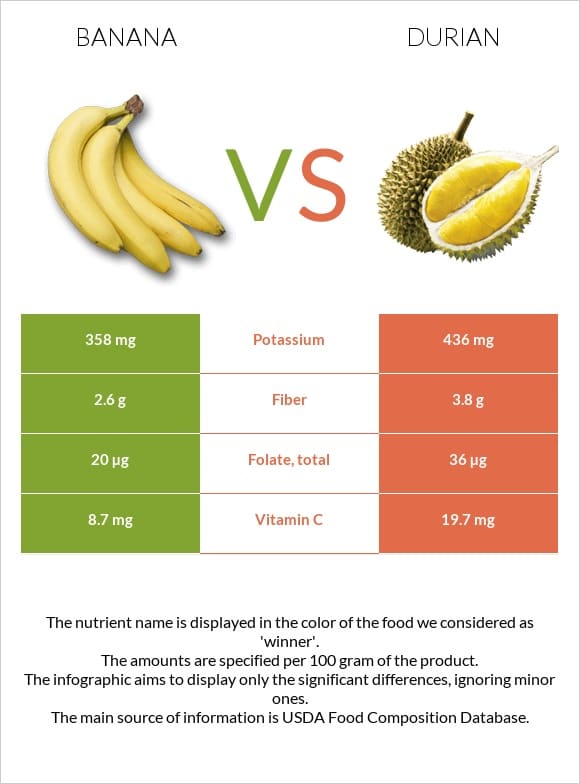
Folate (36mcg per 100g, 9% DV): Folate is critical for preventing neural tube defects in the first trimester. A study in Plant Foods for Human Nutrition identified certain durian cultivars as "superior folate sources," with some varieties containing higher levels than fruits commonly recommended for folate. (Ho & Bhat, 2015, PMC6279852) That said, durian won't replace your prenatal vitamin. It's a supplement to your diet, not a substitute for supplementation.
Potassium (436mg per 100g): Potassium helps regulate blood pressure, which becomes increasingly important as pregnancy progresses. Research published in Hypertension found that higher potassium-to-sodium ratios in pregnant women were associated with lower rates of severe preeclampsia. (Hofmeyr et al., 2019, AHA Journals) Durian's potassium content is comparable to bananas.
Thiamin/B1 (31% DV per 100g): Thiamin requirements increase during pregnancy to support the growing baby's brain development and the mother's increased energy metabolism. Durian is unusually rich in thiamin for a fruit.
Dietary fiber (3.8g per 100g): Constipation is one of the most common pregnancy complaints. Fiber helps, and three pieces of durian provide about 7g of it.
Vitamin C (22% DV per 100g): Supports immune function and helps with iron absorption, both important during pregnancy.
The Real Concerns (Not the Myths)
The legitimate concerns about durian during pregnancy aren't about "heatiness" or traditional food taboos. They're about sugar, calories, and specific conditions.
Gestational Diabetes
This is the most important consideration, and the one Dr Goh specifically flagged. Durian contains 12.9g of sugar per 100g and has a glycemic index of 49, classified as low GI. (Robert et al., 2008, Asia Pacific Journal of Clinical Nutrition) That GI of 49 is actually lower than watermelon (55) and papaya (58).
However, for women who have been diagnosed with gestational diabetes, even low-GI foods need careful portion control. Five medium-sized pieces of durian contain about 160 calories, more than a 330ml can of cola. Three pieces can deliver 40 to 65g of sugar depending on size, which is a significant glycemic load in one sitting.
If you have gestational diabetes, talk to your doctor or dietitian about whether and how much durian you can include. Some may allow small amounts (one to two pieces) paired with protein. Others may recommend avoiding it entirely during the period of glucose management.
Excessive Weight Gain
Durian is calorie-dense at 147 kcal per 100g. In pregnancy, recommended weight gain is carefully monitored. Eating half a durian in one sitting can add 500 to 700 calories on top of your regular meals. If this becomes a regular habit during durian season, it can contribute to excessive gestational weight gain, which is associated with complications like macrosomia (large birth weight) and increased likelihood of cesarean delivery.
The fix here isn't avoiding durian. It's being honest about how much you're eating. Two to three pieces is a snack. Half a durian is a meal's worth of calories.
Durian and Alcohol During Pregnancy
This shouldn't need stating since alcohol is already off-limits during pregnancy, but it's worth reinforcing: the durian-alcohol interaction (ALDH enzyme inhibition) that we cover in our pantang larang article is a real biochemical concern. Pregnant women should be avoiding alcohol entirely regardless of durian.
The Myths (What You Can Ignore)
"Durian Makes the Baby Too Big"
This myth has a kernel of logic buried inside it: high-calorie, high-sugar diets can contribute to macrosomia. But durian itself doesn't make babies big. Excess caloric intake makes babies big. Dr Goh specifically addressed this, noting that durian can help an underweight baby gain weight in cases of poor maternal weight gain, but this is about overall caloric intake, not some special property of durian. If you eat two pieces and otherwise maintain a balanced diet, this is not a concern. (The Singapore Women's Weekly)
"Durian is Too Heaty for Pregnancy"
The concept of "heaty" foods is a Traditional Chinese Medicine framework, not a biomedical one. Raffles Medical Group has addressed the "heatiness" of durian in general terms (not specifically for pregnancy): scientifically, there may be a slight increase in body temperature during digestion due to metabolic processes, but this does not constitute a fever and does not lead to cough or respiratory infection. (Raffles Medical Group) There is no scientific evidence that durian's thermogenic properties cause miscarriage, premature labor, or harm to the fetus.
"Durian Causes Miscarriage"
There is no published research supporting this claim. No case reports, no epidemiological data, no mechanism of action. In countries where durian is widely consumed (Malaysia, Thailand, Indonesia, Singapore), millions of pregnant women eat durian every season without this outcome.
"Durian Raises Body Temperature and Harms the Baby"
Durian is calorie-dense, and digesting calorie-dense foods does produce a slight thermogenic effect (diet-induced thermogenesis). This is true of all food, and it's a normal, tiny fluctuation that has no clinical significance for pregnancy outcomes.
Practical Guidelines
Based on the available medical opinions, here's a sensible framework:
For healthy pregnancies without complications: Durian is safe in moderation. Limit to two to three pieces per sitting, in line with the general recommendation from Changi General Hospital dietitians. Don't eat it daily during durian season. Treat it as an occasional indulgence, not a staple.
For pregnancies with gestational diabetes: Dr Goh's advice is clear: stay away. If your doctor allows exceptions, limit to one to two small pieces and monitor your blood sugar response. Pair with protein if possible to moderate the glycemic impact.
For pregnancies with excessive weight gain concerns: Be mindful of the calorie density. Two to three pieces is 175 to 265 calories. Factor it into your daily intake rather than treating it as a "free" snack on top of everything else.
For all pregnancies: Continue taking your prescribed prenatal vitamins. Durian's nutrients are a bonus, not a replacement for supplementation. If you're on medication, space durian at least two hours from your doses, as covered in our durian and medication article.
Frequently Asked Questions
Can pregnant women eat durian? Yes, in moderation. Dr Goh Shen Li, a consultant obstetrician and gynaecologist, advises that pregnant women can enjoy durian but should exercise moderation. Two to three pieces per sitting is a reasonable amount. Women with gestational diabetes should avoid it.
How much durian can a pregnant woman eat? Most doctors recommend two to three pieces per sitting and not eating it daily. This keeps the calorie and sugar load manageable. Women with gestational diabetes should consult their doctor for personalized guidance.
Does durian cause miscarriage? No. There is no scientific evidence linking durian consumption to miscarriage. This is a traditional belief without medical support.
Is durian too heaty for pregnancy? The concept of "heaty" food is from Traditional Chinese Medicine. Raffles Medical Group has noted that while digestion may cause a slight body temperature increase, this does not constitute a fever or cause illness. There is no evidence that this poses any risk to pregnancy.
Can durian cause gestational diabetes? Durian does not cause gestational diabetes. Gestational diabetes is caused by hormonal changes affecting insulin sensitivity. However, if you already have gestational diabetes, durian's sugar content (12.9g per 100g) means you should avoid it or eat it only with your doctor's approval.
Is durian good for pregnancy nutrition? Durian provides folate (important for neural tube development), potassium (supports blood pressure regulation), thiamin (energy metabolism), fiber (helps with constipation), and vitamin C (immune support and iron absorption). These nutrients are relevant during pregnancy, but as Dr Goh notes, there is no scientific proof that durian is a pregnancy superfood. It should complement, not replace, prenatal vitamins.
This article is for informational purposes only and does not constitute medical advice. Always consult your obstetrician, midwife, or healthcare provider about dietary choices during pregnancy.
Sources: Dr Goh Shen Li quoted in The Singapore Women's Weekly, "Durian Myths: Will Eating Durian While Pregnant Make My Baby Grow Bigger?" Changi General Hospital dietitians via HealthXchange.sg, "Durian: Health Benefits and Myths." Raffles Medical Group, "Five Myths about Durians." WebMD, "Durian: Uses, Side Effects, Precautions." Ho & Bhat (2015), "Durian Fruits Discovered as Superior Folate Sources", Plant Foods for Human Nutrition. Robert et al. (2008), "Glycemic index of common Malaysian fruits", Asia Pacific Journal of Clinical Nutrition. Hofmeyr et al. (2019), "Aldosterone, Salt, and Potassium Intakes as Predictors of Pregnancy Outcome", Hypertension. Nutritional data from USDA FoodData Central (FDC ID 168192).