

No. Durian contains zero cholesterol. Not a trace.
This isn't a technicality or a rounding error. Cholesterol is only found in animal-derived foods: meat, dairy, eggs, seafood. Durian is a fruit. No plant food contains dietary cholesterol. This is basic food science, confirmed by the USDA FoodData Central database (FDC ID 168192), which lists durian's cholesterol content as 0mg per 100g.
And yet, "durian raises cholesterol" remains one of the most persistent food myths in Southeast Asia. So where does it come from, and what does the actual research say?
Why People Think Durian Raises Cholesterol
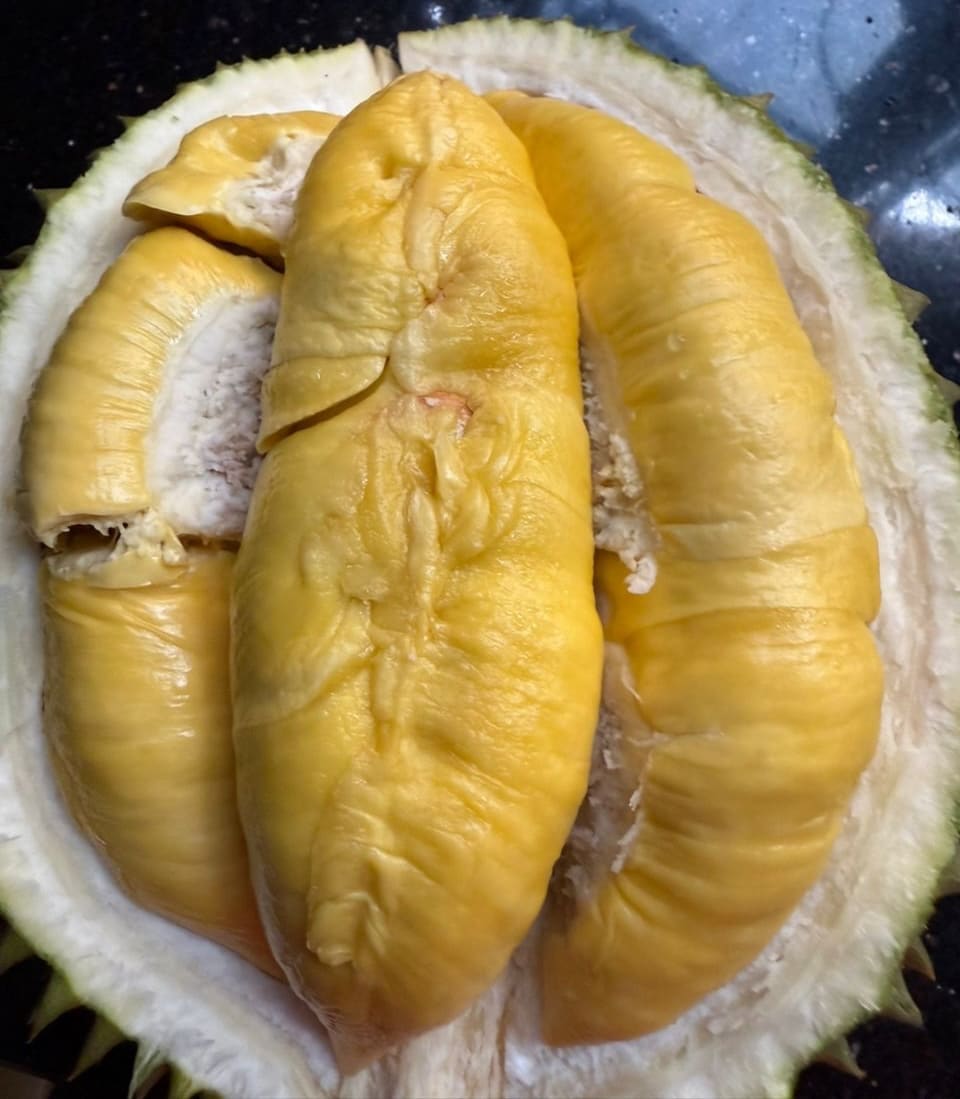
The myth likely persists because of how durian feels when you eat it. It's rich, creamy, and fatty. It coats your mouth the way butter or ice cream does. That textural experience makes people associate it with high-fat, high-cholesterol foods.
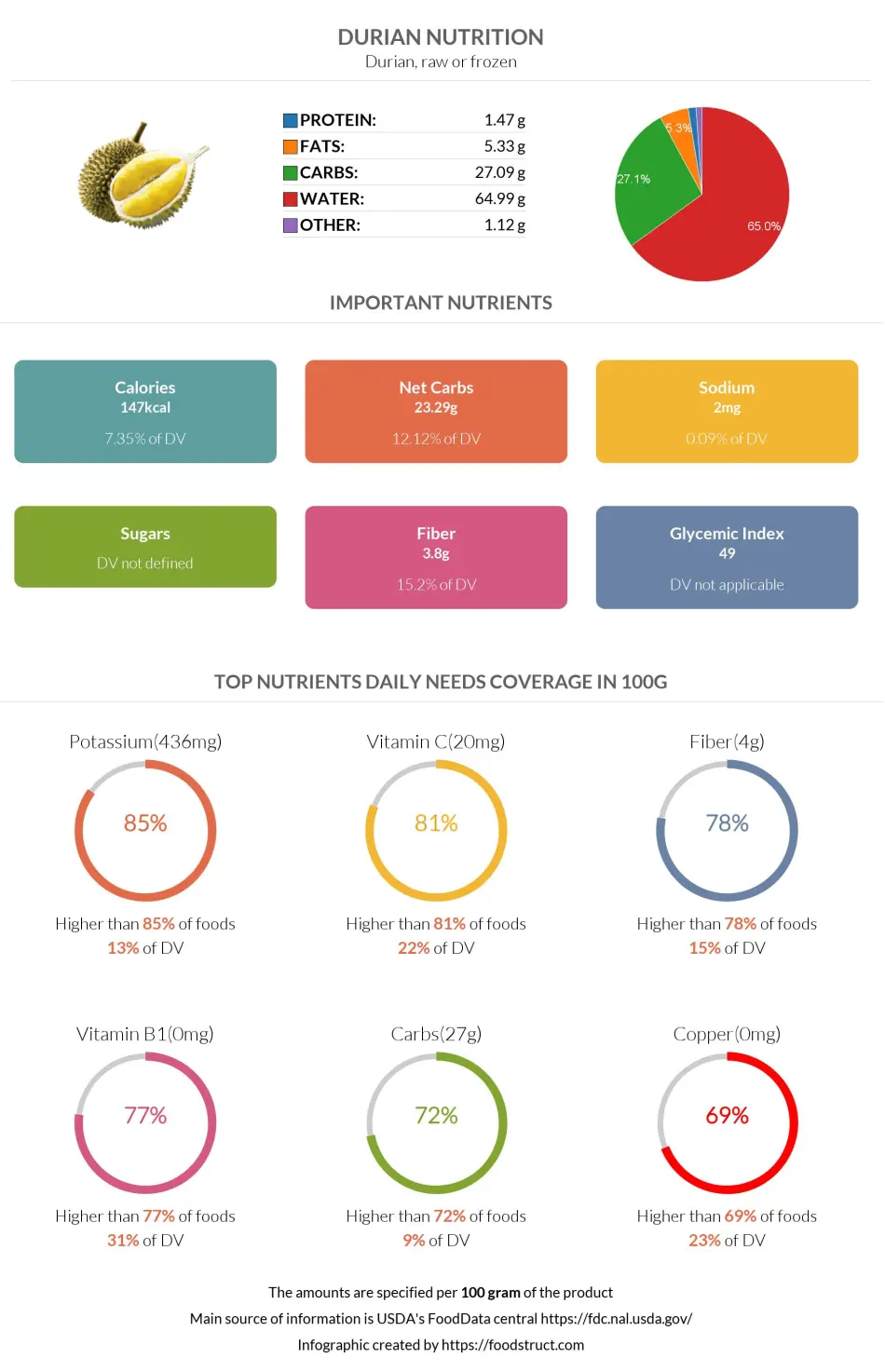
There's also the fact that durian does contain fat, which is unusual for a fruit. At 5.3g of fat per 100g, durian has more fat than most fruits, which typically sit below 0.5g. People who hear "durian has fat" sometimes jump to "durian has cholesterol," but these are two different things. Plenty of plant foods are high in fat (avocados, nuts, coconut) without containing any cholesterol.
Both Raffles Medical Group and the dietitians at Changi General Hospital (SingHealth) have explicitly listed "durian increases cholesterol" as a myth. Raffles calls it out as one of their "Five Myths about Durians," noting that durian does not contain cholesterol and has limited saturated fat. (Raffles Medical Group) The Changi General Hospital dietitians go further, stating that durian's monounsaturated fats can actually help lower harmful cholesterol levels and moderate blood pressure. (HealthXchange.sg)
The Philippine National Nutrition Council has also published a dedicated article confirming that durian is not loaded with cholesterol, explaining that this is true of all plant foods. (NNC Philippines)
What Fat is Actually in Durian
Durian contains 5.3g of total fat per 100g, broken down as follows:
| Fat Type | Amount per 100g |
|---|---|
| Total fat | 5.3g |
| Saturated fat | 1.5g |
| Monounsaturated fat | ~2.4g |
| Polyunsaturated fat | ~0.3g |
| Cholesterol | 0mg |
Source: USDA FoodData Central (FDC ID 168192)
The majority of durian's fat is monounsaturated, the same category as olive oil and avocado. A 2019 review in Molecules noted that durian's lipid profile includes oleic acid, a monounsaturated fatty acid associated with cardiovascular health benefits in broader dietary research. (Aziz & Jalil, 2019, PMC6463093)
The saturated fat content (1.5g per 100g) is modest. For comparison, a tablespoon of butter contains about 7g of saturated fat, and a glass of whole milk has about 5g. Three pieces of durian gives you roughly 2 to 3g of saturated fat, which is not a significant amount in the context of a normal diet.
What Research Says About Durian and Blood Lipids
Here's where it gets interesting. Not only does durian not contain cholesterol, but animal studies suggest it might actually help improve cholesterol levels.
A 2007 study published in Food Chemistry fed rats a high-cholesterol diet supplemented with durian and measured the effects on blood lipids. The results: rats fed durian showed a 14.9% reduction in total plasma cholesterol and a 21.6% reduction in LDL ("bad") cholesterol compared to the control group. (Leontowicz et al., 2007, PubMed 17673829)
A follow-up study by the same research group in 2011 tested durian at different stages of ripening. They found that ripe durian in particular significantly hindered the rise in plasma lipids in rats on high-cholesterol diets, and this effect was attributed to the antioxidant activity of polyphenols and flavonoids in the fruit. (Leontowicz et al., 2011, ScienceDirect)
Important caveat: These are animal studies, not human clinical trials. We can't say "eating durian lowers your cholesterol" based on rat studies alone. But we can say that the available research points in the opposite direction from the myth. The evidence, limited as it is, suggests durian may have a neutral to mildly positive effect on blood lipids, not a negative one.
The Calorie Question (The Real Thing to Watch)
If durian doesn't raise cholesterol, why do doctors still tell people to eat it in moderation?
The answer is calories, not cholesterol. Durian packs 147 kcal per 100g, and it's easy to eat 300 to 500g in a single sitting without realizing it. That's 440 to 735 calories, roughly a full meal's worth of energy from what most people consider a snack.
Excess caloric intake over time leads to weight gain, and obesity is a well-established risk factor for high cholesterol, heart disease, and metabolic syndrome. So while durian itself doesn't raise cholesterol, eating too much of anything (durian included) can indirectly lead to the metabolic conditions that do.
This is the real concern that doctors like the Changi General Hospital dietitians are flagging when they recommend two to three seeds per sitting. It's not about the cholesterol in the fruit (there is none). It's about the calorie density and the human tendency to eat half a durian before stopping.
Quick Reference
| Question | Answer |
|---|---|
| Does durian contain cholesterol? | No. 0mg per 100g. |
| Does durian raise blood cholesterol? | No evidence it does. Animal studies suggest it may help lower LDL. |
| What type of fat is in durian? | Mostly monounsaturated (similar to olive oil). |
| How much saturated fat? | 1.5g per 100g, which is low. |
| Should people with high cholesterol avoid durian? | Not because of cholesterol. Watch portions for calorie control. |
| Why do people think durian raises cholesterol? | Its rich, creamy texture mimics high-fat dairy and meat. |
Frequently Asked Questions
Is durian high in cholesterol? No. Durian contains zero cholesterol. Cholesterol is only found in animal-derived foods. Durian is a plant food and does not contain any dietary cholesterol. This has been confirmed by USDA nutritional data and explicitly stated by institutions including Raffles Medical Group and Changi General Hospital.
Does eating durian raise your cholesterol levels? There is no evidence that durian raises blood cholesterol. Animal studies by Leontowicz et al. (2007) found that rats fed durian on a high-cholesterol diet actually showed lower total cholesterol and LDL levels compared to controls. Human clinical trials are lacking, but the available evidence does not support the myth.
Can people with high cholesterol eat durian? Yes, in moderation. Durian contains no cholesterol and modest amounts of saturated fat (1.5g per 100g). The main thing to watch is portion size, because durian is calorie-dense at 147 kcal per 100g, and excess caloric intake can contribute to weight gain, which is itself a risk factor for high cholesterol.
Why does durian taste so fatty if it has no cholesterol? Durian contains 5.3g of fat per 100g, which is high for a fruit but not high in absolute terms. Most of this fat is monounsaturated, the same type found in olive oil and avocados. The creamy, rich mouthfeel comes from this fat content combined with durian's unique composition of sugars and volatile compounds.
Is durian good for heart health? Durian's monounsaturated fat profile and potassium content (436mg per 100g) are both associated with cardiovascular health in broader dietary research. However, no human clinical trial has specifically tested durian's effect on heart health outcomes. The nutrients are promising, but the evidence is indirect.
Sources: USDA FoodData Central (FDC ID 168192). Raffles Medical Group, "Five Myths about Durians." Changi General Hospital dietitians via HealthXchange.sg, "Durian: Health Benefits and Myths." National Nutrition Council Philippines, "Durian is loaded with Cholesterol: A Fact or a Myth?" Aziz & Jalil (2019), "Bioactive Compounds, Nutritional Value, and Potential Health Benefits of Indigenous Durian", Molecules. Leontowicz et al. (2007), "The nutritional and metabolic indices in rats fed cholesterol-containing diets supplemented with durian", Food Chemistry. Leontowicz et al. (2011), "Positive effects of durian fruit at different stages of ripening on the hearts and livers of rats fed diets high in cholesterol", European Journal of Integrative Medicine.