

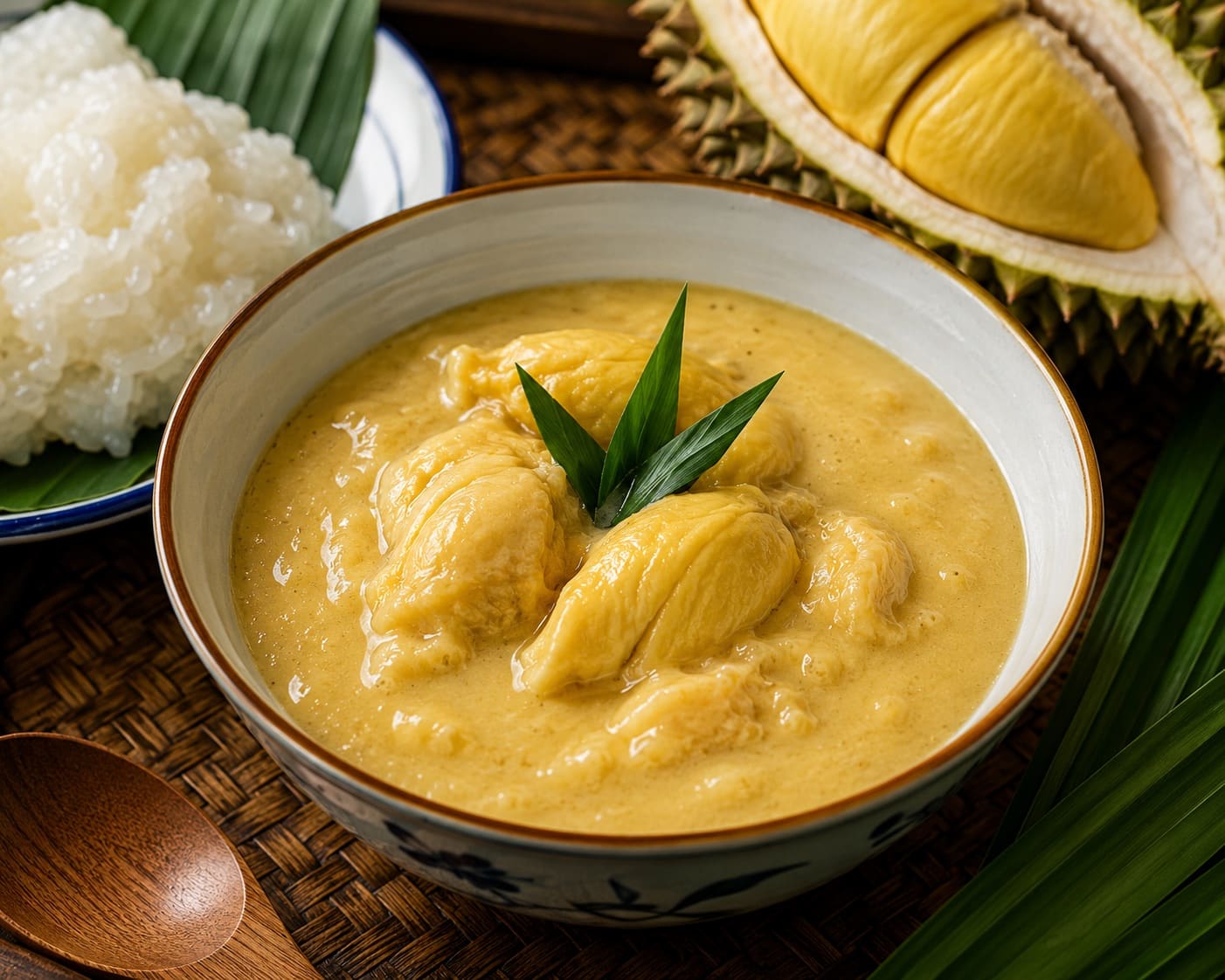
Serawa durian is one of those dishes that feels like it was designed to make durian lovers cry tears of joy. Fresh durian flesh, simmered in coconut milk with palm sugar and pandan leaves until it becomes a thick, fragrant, golden sauce. You pour it over steamed glutinous rice, or you dip bread into it, or if nobody is watching, you just eat it straight from the pot with a spoon.
This is a traditional Malay dessert that shows up at Hari Raya gatherings, festive bazaars, and family kitchens across Malaysia every durian season. Some families call it pengat durian or bubur durian depending on the region, but the idea is the same: cook durian in coconut milk until it becomes something even more indulgent than the fruit itself. (Nava's Zen)
The beauty of serawa durian is how simple it is. Five or six ingredients, one pot, maybe twenty minutes of cooking. The hardest part is not eating all the durian before it makes it into the pan.
What You Need
For the Serawa (Durian Sauce)
| Ingredient | Amount | Notes |
|---|---|---|
| Fresh durian flesh | 300g (about 5-6 seeds' worth) | Use ripe, creamy durian. Musang King works beautifully, but kampung durian is traditional. |
| Thick coconut milk | 200ml | Fresh squeezed is best. Canned or boxed works. |
| Thin coconut milk or water | 150-200ml | Controls thickness. Start with 150ml, add more if needed. |
| Palm sugar (gula melaka) | 80g | Shaved or chopped. This is the soul of the dish. |
| White sugar | 1-2 tablespoons | Optional. Adjust to your sweetness preference. |
| Pandan leaves | 2-3 leaves | Knotted. Adds fragrance. |
| Salt | A pinch | Balances the sweetness. Don't skip this. |
For the Glutinous Rice (Pulut)
| Ingredient | Amount | Notes |
|---|---|---|
| Glutinous rice | 300g | Soaked in water for at least 4 hours, ideally overnight. |
| Coconut milk | 100ml | Mixed with the rice before steaming for richness. |
| Pandan leaves | 1-2 leaves | Placed on top while steaming. |
| Salt | A pinch |
Step-by-Step: Making the Serawa
Step 1: Prepare the base. Put the thin coconut milk (or water) in a pot with the palm sugar and pandan leaves. Turn the heat to medium. Stir until the palm sugar dissolves completely. This takes about 3-4 minutes. The liquid will turn a deep amber color from the gula melaka.
Step 2: Add the durian. Once the sugar is dissolved, add the durian flesh. Break it up gently with a spoon or spatula as it heats. You want some chunks remaining for texture, not a completely smooth paste. Let this simmer for about 5 minutes, stirring occasionally. (Maya Kitchenette)
Step 3: Pour in the thick coconut milk. Add the thick coconut milk and stir to combine. The mixture will lighten in color and become more creamy. Add the white sugar if using, and the pinch of salt. (Mission Foods Malaysia)
Step 4: Simmer until thick. Keep the heat at medium-low and stir frequently. The serawa should thicken to a pourable consistency, similar to a thick pancake batter or condensed soup. This takes another 5-8 minutes. Do not let it boil vigorously once the thick coconut milk is in, or the coconut milk may split.
Step 5: Taste and adjust. The final flavor should be a balance of sweet (from the palm sugar and durian), rich (from the coconut milk), fragrant (from the pandan), and just slightly salty. Adjust sugar or salt as needed. Remove the pandan leaves before serving.
Step-by-Step: Making the Glutinous Rice
Step 1: Soak the rice. Wash the glutinous rice until the water runs clear. Soak it in water for at least 4 hours, preferably overnight. This is not optional. Unsoaked glutinous rice will steam unevenly and have hard spots.
Step 2: Drain and season. Drain the soaked rice. Mix in the coconut milk and salt. The rice should be coated but not swimming in liquid.
Step 3: Steam. Line a steamer with muslin cloth or banana leaves. Spread the rice evenly, place pandan leaves on top, and steam over high heat for 25-30 minutes. The rice is done when it's translucent, sticky, and soft throughout. No hard white centers.
Step 4: Rest. Let the steamed rice rest for 5 minutes before serving. This allows the texture to set slightly.
How to Serve
The traditional way to serve serawa durian is simple: scoop a mound of hot glutinous rice onto a plate or into a bowl, then pour the warm serawa generously over it. The rice absorbs the sauce, and every bite is a mix of chewy rice, creamy coconut, and intense durian.
But serawa durian is versatile. Here are the common ways it gets eaten across Malaysia:
With glutinous rice (pulut). This is the classic combination. The starchy, chewy rice provides contrast to the rich sauce. (Resepi Che Nom)
With kuih serabai. Serabai is a soft, spongy rice flour pancake traditionally served with sweet sauce. During durian season, serawa durian replaces the regular kuah as the dipping sauce. This is a traditional combination, particularly popular in the east coast states. (Rasa.my)
With bread. Roti benggali (a type of dense bread) or regular white bread are common accompaniments, especially when you want something quick. Tear the bread and dip it directly into the warm serawa.
On its own. Plenty of people just eat serawa durian as a porridge, straight from the bowl.
Tips for the Best Serawa Durian
Use ripe durian. This is not the dish for underripe or crunchy-textured durian. You want soft, creamy, intensely flavored flesh. The riper and more pungent, the better the serawa will taste.
Do not overboil the coconut milk. Once you add the thick coconut milk, keep the heat moderate and stir constantly. High heat will cause the coconut milk to split (the oil separates from the liquid), which makes the serawa look greasy and changes the texture. If it does split, it still tastes fine, it just does not look as smooth.
Palm sugar matters. Gula melaka gives serawa durian its distinctive deep caramel sweetness. White sugar alone will not taste the same. If you cannot find palm sugar, coconut sugar is the closest substitute.
Control the thickness. The serawa should be thick enough to coat a spoon but still pourable. If it gets too thick during cooking, add a splash of thin coconut milk or water. If it is too thin, let it simmer a bit longer. Maya Kitchenette notes that the consistency should be similar to a thick pancake batter. (Maya Kitchenette)
Leave some durian chunks. Do not mash the durian into a completely smooth paste. Having small pieces of durian in the serawa gives texture variety and occasional bursts of concentrated durian flavor.
Storage
Serawa durian is best eaten fresh, the day it is made. The flavors are most vibrant when warm.
If you have leftovers, store the serawa and the glutinous rice separately in airtight containers in the fridge. The serawa will keep for 2-3 days refrigerated. Reheat gently on the stove (not the microwave, which tends to split coconut milk) over low heat, adding a splash of coconut milk or water if it has thickened too much overnight.
The glutinous rice will harden in the fridge. Re-steam it for 5-10 minutes to restore its soft, chewy texture. Microwaving with a damp paper towel also works in a pinch.
Serawa durian does not freeze well. The coconut milk changes texture after thawing.
Frequently Asked Questions
What is serawa durian? Serawa durian is a traditional Malaysian dessert made by cooking fresh durian flesh in coconut milk with palm sugar and pandan leaves. It produces a thick, sweet, fragrant sauce that is typically served poured over steamed glutinous rice. It is also known as pengat durian or bubur durian in different regions of Malaysia. (Nava's Zen)
What is the difference between serawa durian and pengat durian? They are essentially the same dish with regional naming differences. In some parts of Malaysia, particularly the east coast, it is called pengat durian. In the northern states, it tends to be called serawa durian. The cooking method and ingredients are the same. When served specifically over glutinous rice, it is most commonly referred to as serawa durian or pulut durian. (Nava's Zen)
Can I use frozen durian for serawa? Yes. Frozen durian flesh works well for serawa since it is being cooked down anyway. Thaw it completely before adding it to the pot. The texture difference between fresh and frozen is less noticeable once everything is simmered together.
What type of durian is best for serawa? Any ripe, creamy durian works. Traditional village recipes use kampung durian (local varieties), which tend to be less sweet and more aromatic. Premium varieties like Musang King produce a richer, more intensely flavored serawa due to their higher fat and sugar content. Use whatever is available and affordable.
Is serawa durian served hot or cold? Traditionally, serawa durian is served warm, poured over hot steamed glutinous rice. Some people enjoy it at room temperature, but it is rarely served cold. The warmth brings out the pandan and durian aromas.
Can I make serawa durian without palm sugar? Palm sugar gives serawa its distinctive caramel depth. If you cannot find it, coconut sugar is the closest substitute. Brown sugar works as a last resort but produces a different flavor profile. White sugar alone will make the serawa taste flat.
Recipe adapted from traditional Malaysian sources including Maya Kitchenette, Mission Foods Malaysia, Nava's Zen, Resepi Che Nom, and Rasa.my.