We have 350 trees across 10 acres: Black Thorn, Musang King, and IOI. For years, every harvest went through the same cycle: workers report to a WhatsApp group, the clerk picks it up, and enters it into Excel.
It worked. Until you needed something from the data.
The Excel Trap
Want to see which trees produced the most this season? New Excel sheet. Re-enter the data. Want to compare varieties? Another sheet. More re-entering. Want to spot which block is underperforming? You guessed it.
Every new question meant asking the clerk to rebuild something from scratch. The data existed, but it was trapped in formats that couldn't talk to each other.
What Changed
We built DurianPro for our own farm. The idea was simple: enter the data once, then slice it however you need.
A worker logs a harvest in 5 taps: Quick Action > Harvest > Select Tree > Enter count > Save. That's it. No WhatsApp messages to chase, no clerk re-entering numbers. The data flows in and stays structured. (See how harvest analytics turns these entries into actionable insights.)
For workers who need more detail, the app also supports logging multiple harvests for a tree in one go, marking pest or disease issues on a specific harvest, changing the harvest date, attaching photos, and tracking individual fruit weights. But the basic 5-tap flow covers 90% of daily use.
Our workers picked it up immediately. No resistance, no training sessions. The UX went through multiple iterations before we got it this clean, but now it just works.
2,760 Harvests and Counting
As of today, we've logged over 2,760 harvests in DurianPro. That's 2,760 data points that would have been scattered across WhatsApp threads and Excel files.
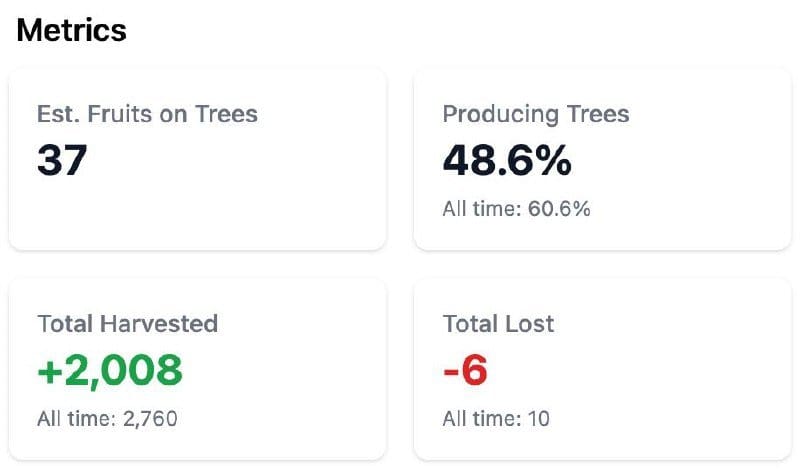
The dashboard shows us at a glance: 48.6% of our trees are producing this current period (60.6% all-time), we have 37 estimated fruits still on trees, and we've only lost 6 this period out of 10 total losses. That kind of visibility used to take hours of spreadsheet work. Now it's just there.
What the Data Showed Us
Here's the part we didn't expect.
Our best tree, Tree #112, produced 88.75kg of fruit in 2025. We knew it was a good tree, but we didn't know how good until we could compare it against every other tree on the farm.
That's valuable information. Knowing which trees are your best performers lets you reverse-engineer what's behind the good performance. Maybe it's the soil in that spot, maybe it's the rootstock, maybe it's the microclimate. You can try to breed from those trees. Without data, you're just guessing.
The Map Changed Everything
When we started mapping harvest data geographically, patterns we never expected jumped out.
Trees that produced 4 harvests in a year? They clustered together. Trees hit by pest and disease problems? Also clustered, in different areas.
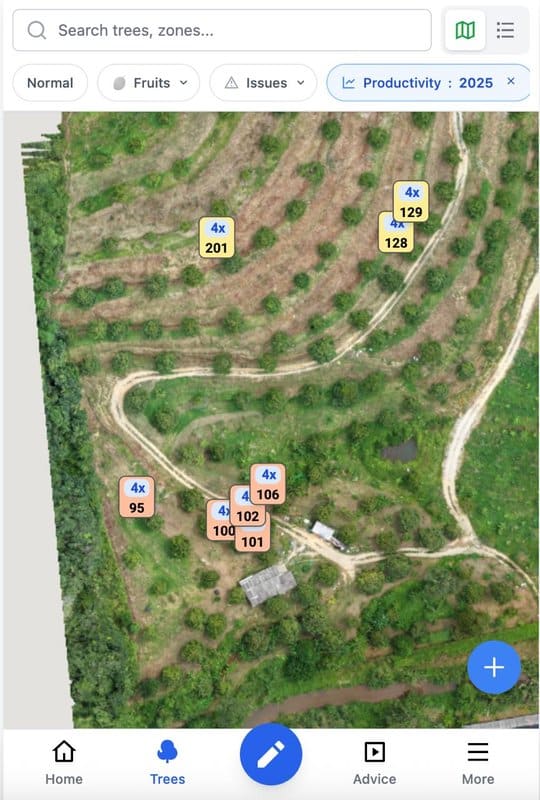
Farming is complicated. You never really know for certain why a cluster happens. It could be coincidence. But at least now there's data pointing you to "warm" areas that deserve closer attention.
For the pest clusters, terrain often explains it. Low-lying areas where water doesn't drain quickly create humidity, and humidity is a hotbed for pests and diseases. Trees at the perimeter of an estate are also more susceptible to external pest pressure. With the map data, farmers can actually verify these patterns against their own land instead of relying on gut feel alone.
When we spotted a disease cluster, we informed our workers to pay extra attention to that area and report back if something looked different. That kind of targeted response is only possible when you can see the pattern. DurianPro's pest & disease management tools help you track, map, and respond to these issues systematically.
"I Don't Need an App, I Know My Trees"
We hear this a lot. And honestly, we thought the same thing before we started tracking properly.
But there's a difference between knowing your trees and having the data to prove what's working and what's not. Some of our non-producing trees sat there for years before the numbers made it obvious they needed attention. Almost 40% of our trees aren't producing in any given period. That's a lot of resources going to trees that aren't paying back.
The farmers who track properly are the ones finding where to cut costs and where to push for more yield. The data doesn't lie, it just needs to be captured properly. And when it comes time to sell, sales tracking closes the loop from tree to buyer.
Frequently Asked Questions
How many trees can DurianPro handle? No limit. Whether you have 50 trees or 5,000, the system scales.
Does it work offline? Offline mode is currently in development. For now, you need a connection to log data, but most estates have at least basic mobile coverage.
What does it cost? DurianPro is free to start. No credit card required.
Can my workers use it? Yes. The 5-tap harvest flow was designed for field workers. If they can use WhatsApp, they can use DurianPro.
Try It
If you manage a durian estate and you're still doing the WhatsApp-to-Excel shuffle, give DurianPro a try. It's free to start, and the data you collect from day one starts compounding into insights you can't get any other way.
CJ manages a 350-tree durian estate in Malaysia and built DurianPro to solve his own farm management problems.