
As durian prices collapsed across Malaysia in mid-2026, a single question split the growing community: should farmers keep waiting for fruit to ripen and drop naturally from the tree, or cut it early like their neighbours in Thailand and Vietnam? Cut-harvest (割果) promises longer shelf life, earlier payment, and cheaper freight; tree-ripening (熟落 or 树熟, "tree-drop") is the tradition many see as Malaysia's signature and its edge in a crowded market. This guide lays out both sides as the growers themselves argued them, using only the views shared by durian experts in the durianpro Academy.
The debate turned heated for a reason. This was the season the durian "tsunami" arrived: a bumper harvest, and prices for premium Musang King reportedly falling from around RM90 per kilogram to as little as RM9 in some places. When margins vanish, how you harvest stops being a matter of taste and becomes a matter of survival.
What the two methods actually mean
At the centre of the argument are two harvesting philosophies.
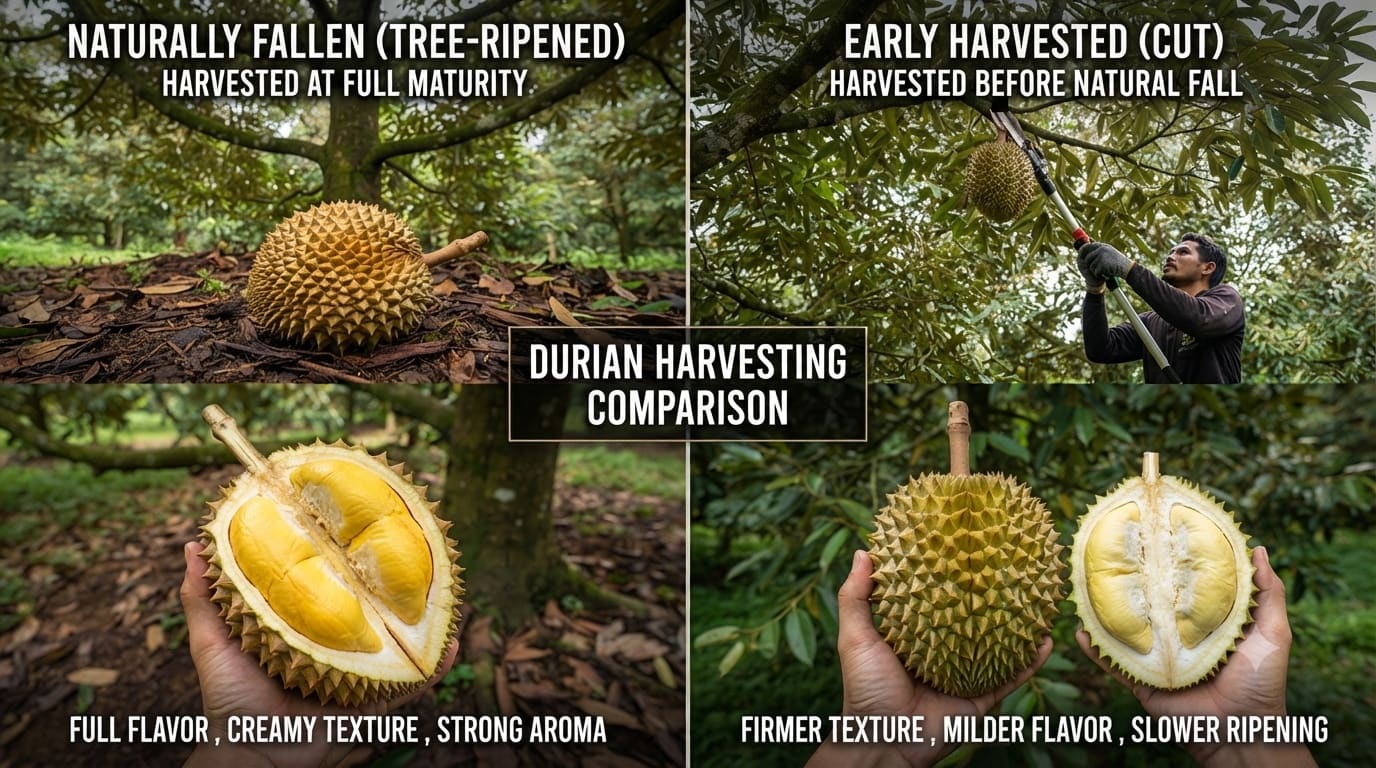
| Tree-ripened (熟落 / 树熟) | Cut-harvest (割果) | |
|---|---|---|
| How | Fruit stays on the tree until it detaches on its own | Fruit is cut while still firm, before it drops |
| Ripening | Ripe at the moment it falls | Ripens off the tree over about 2 to 3 days |
| Shelf life | Short; must be sold quickly | Longer; suits land, sea, and slower routes |
| Traditional home | Malaysia | Thailand, Vietnam |
| Main appeal | Flavour and reputation | Logistics, risk control, and timing |
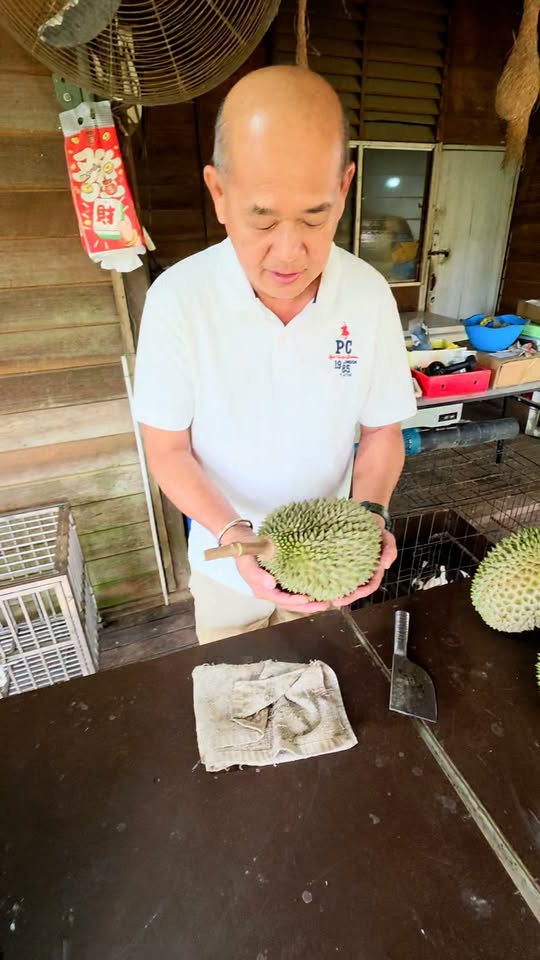
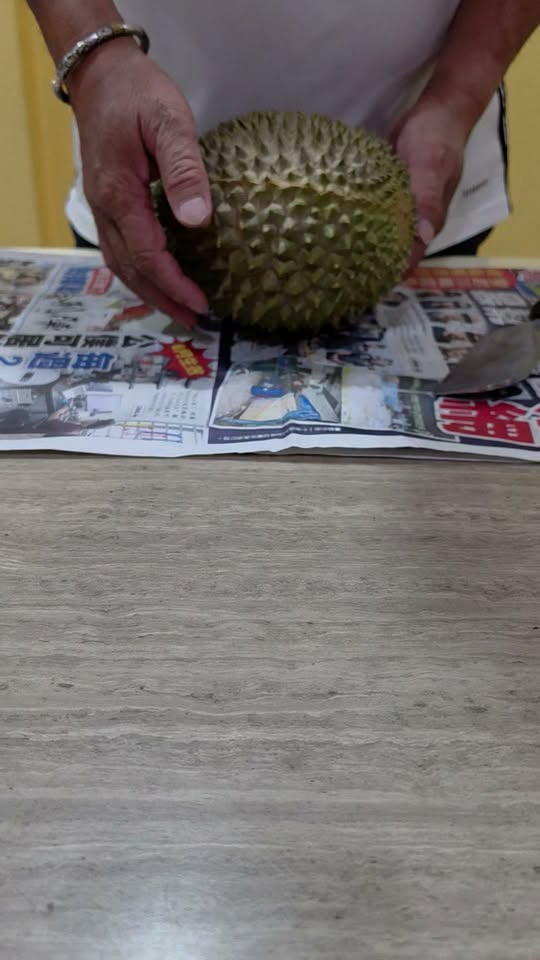
Tree-ripened fruit is caught or collected the moment it falls, at full natural maturity. Cut-harvest fruit is taken off the tree earlier and allowed to finish ripening in storage. As one grower, Sifu Yip, demonstrated, cut fruit ripens over the following two to three days, and a short fermentation of a few hours pushes the flavour from sweet-and-creamy toward the deeper, slightly bitter profile many connoisseurs prize. His central claim is that with the right cutting maturity and handling, cut fruit reaches a taste "not much different" from tree-dropped, and he argues it can even hold better because it does not reabsorb water when temperatures swing the way fallen fruit sometimes does.
The backdrop: why prices crashed in 2026
You cannot understand the harvest debate without the market it erupted in. The growers named several forces hitting at once.
- Oversupply and young trees. A heavy season collided with thousands of acres of Musang King and Black Thorn, planted in recent years, now fruiting for the first time. As the grower known as Xinye Dana noted, young trees naturally throw more problem fruit, and this year a lot of it hit the market together.
- A quality gap the market could not price. Dana's core argument is that when second-flowering and other-state fruit arrived with defects (empty pockets, half-ripe flesh, "tiger-stripe"), sellers slashed prices just to move it, and good fruit was dragged down to the same level. The market simply could not distinguish a carefully grown A-grade fruit from a poor one, so both sold at the bad-fruit price.
- Cheap imports wearing a local label. Dana described Thai Musang King and Black Thorn landing at roughly RM28 to RM31 per kilogram including transport, against Malaysian fruit still in the RM50s, with some being passed off as local, and even re-exported through Malaysia with a changed certificate of origin.
- A frozen-stock hangover. The grower Malaysia Tang Ge explained that factories were still holding unsold liquid-nitrogen frozen fruit from the previous year, some of it spoiled. Sitting on that loss, they were unwilling to buy fresh fruit to freeze this season, so the daily fresh harvest had nowhere to go but "fly or sell local."
- Logistics that cannot flex. Fresh export to China leans on air freight, and planes fly in full but return empty, which makes new routes uneconomic. Without better preservation for sea or land freight, surplus fresh fruit is forced back onto the domestic market at any price.
Against that backdrop, cut-harvesting stopped being a fringe technique and became, for many, a lifeline.
The case for tree-ripened: protect the signature
The most forceful defence of tradition came from Malaysia Tang Ge, who frames tree-ripening as Malaysia's "name card." His argument runs on identity and scale. He cites a striking split: of all durian imported into China, roughly 50 percent comes from Vietnam and 45 percent from Thailand, while Malaysia holds under 3 percent. With numbers that small, he argues, Malaysia can never win on volume; it can only win on being different, and tree-ripening is exactly that difference. The world learned that Malaysian durian is special because growers held to the natural drop while others cut.
To him, cutting is a "shortcut" onto the road Thailand and Vietnam already walk, and taking it erases the one thing that makes Malaysian fruit stand out. He warns of history repeating: Malaysia was once the world's top producer of rubber, then palm oil, and lost both leads. Durian, he argues, is the "third knife," and the same self-inflicted decline could follow if growers abandon what makes their fruit premium. His outlook is not pessimistic, though. He projects Malaysia's share of the China market could grow from around 3 percent today toward 8 to 10 percent by 2030, and sees the real work as fixing cargo capacity and preservation, not switching harvest method.
The grower MT AlexChan lands in a similar place from a gentler angle. He accepts that neither method is simply right or wrong, and that the price crash pushed many farmers toward cutting out of sheer morale and economics. But given a free choice, he says, he still chooses the natural drop, because it is the durian culture Malaysia is known for.
The case for cut-harvest: survive, then compete
The pragmatists argue that principle does not pay a farmer whose fruit is worth less than it cost to grow.
Their strongest structural point comes again from Dana, who, despite prizing quality, makes the economic case for cutting plainly: cut-harvesting transfers risk from the farmer to the buyer, because the buyer prices and takes the fruit at the point of cutting. The farmer gets paid earlier and escapes the daily panic of watching a ton or more drop each day into a market that cannot absorb it. Longer shelf life then opens cheaper routes, land or sea freight instead of only air, and, he suggests, cut-harvesting may have relieved market pressure rather than caused the crash.
Ming's Tropical Farm leans pro-cut for a reason specific to Malaysia: old trees. Because much of Malaysia's acreage is mature, old-tree fruit, Ming argues its cut fruit starts from a higher quality base than Thailand's, where younger, more hormone-driven trees are common. He also turns the counterfeiting fear around. Yes, if Malaysia cuts, its neighbours could imitate cut Malaysian fruit; but if Malaysia insists on tree-drop, those same neighbours, with more mature logistics, could just as easily imitate tree-dropped fruit. His verdict: cutting is not the final answer, but it is the best solution available now, while transport and preservation catch up.
The couple behind Durian Fufu (Jay&Jun) capture the reluctant middle. They agree with much of Tang Ge's principle, yet conclude that under current conditions there is little choice. Cut-harvesting's longer time-window lets small-town stalls buy without fear of fruit spoiling before it sells, and it lets farmers move fruit ahead of a price collapse rather than into it. They are candid about the downside, that cutting can dent Malaysia's reputation and that judging cut maturity is genuinely hard, but they pose the sharpest question in the whole debate: if everyone waits for a future preservation technology, will the farmers still be there when it arrives?
Sifu Yip, the most committed cutter, simply points to his customers. They want the shelf life, he says, and he has been refining cut-harvest quality for years through tasting reviews. His stance is not that everyone should cut, but that both can coexist: "You do your tree-ripened, I will do my cut-harvest," each serving the buyers who want it.
Where the growers actually agree
Strip away the heat and a surprising consensus appears. Beneath the cut-versus-drop shouting, several of the most thoughtful voices point to the same underlying problem, and it is neither method.
It is grading. Dana argues the durian industry's real failure is that it cannot reliably separate good fruit from bad and price them differently, so the careful grower and the careless one meet at the same crashing price. He wants a genuine A-line and B-line standard based on quality rather than on how many pockets a fruit has. AlexChan, Ming, and Jay&Jun echo versions of the same idea: both harvest methods can serve different markets at once, cut grades for distant export where shelf life rules, tree-ripened for local buyers and markets like Singapore that pay for higher ripeness. The cold chain to China, AlexChan notes, already runs 20 to 48 hours and preserves fruit well, so the method matters less than the consistency.
Even the buyers, as the growers describe them, care less about the cut-versus-drop philosophy than about stability. What a Chinese importer wants, in Dana's telling, is not to gamble on a "blind box": no burnt seeds, no half-ripe flesh, no tiger-stripe, the same fruit every time. Flavour is a reason to choose Malaysia; reliability is what earns the repeat order.
What it means for growers
If there is a practical takeaway, it is that the harvest method is a business decision, not a moral one, and it depends on your farm.
- Know your market. Selling to distant export buyers who value shelf life points one way; selling to local connoisseurs who prize the natural drop points the other. Many farms can do both, splitting supply by grade and destination.
- Master the method you choose. Cut-harvest only works if you can read cutting maturity and manage the ripening; a badly cut fruit is the "raw sweet-potato" durian that gave cutting its bad name. Tree-ripening only pays if your quality is high enough to command the premium it promises.
- Fix quality and records first. The problem every grower named is the inability to prove and price quality. That is where good record-keeping earns its place: knowing which trees and which practices produce stable fruit, what method each block was harvested by, and what buyers actually paid. Tracking that per tree, season over season, is exactly what durianpro is built for, and it is what turns "trust me, it is good fruit" into something a buyer can rely on.
The cut-versus-drop debate will not be settled this season. But the growers arguing it mostly agree on where the real fight is: not on the tree, but in proving quality and getting paid for it.
Sources and credits
This explainer synthesises views shared by durian growers and traders in the durianpro Academy, most speaking in Chinese. Credit to:
- Malaysia Tang Ge (马来堂哥)
- Xinye Dana (鑫爷Dana)
- MT AlexChan
- Ming's Tropical Farm (小铭)
- Durian Fufu, Jay&Jun (榴莲夫妇)
- Sifu Yip (叶师傅)
Their full videos, with field demonstrations and tastings, live in the durianpro Academy. Views are the growers' own, and this piece presents the debate rather than taking a side.